
From Crisis of Trust to a Culture of Encounter
Reimagining how we build change from the ground up
“If you don’t start with the person – with names, not numbers – you have no chance.” – Andy Burnham, Theos Lecture, Manchester Central Hall, Oct 2025
A Moment for Reflection
This article grows out of a reflection on a recent Theos Think Tank lecture delivered by Andy Burnham at Manchester Central Hall – a talk that wrestled with one of the most urgent questions of our time: How do we rebuild trust in one another, in our institutions, and in public life itself?
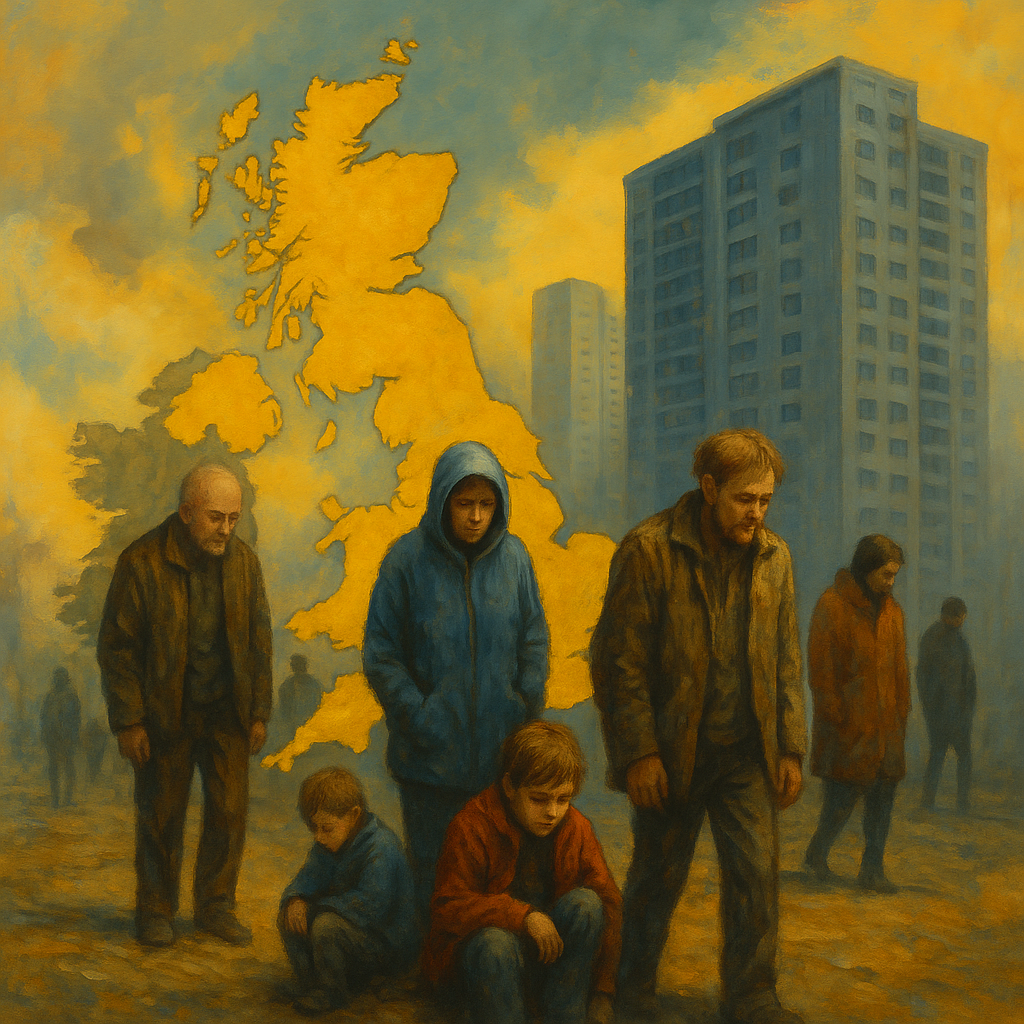
Burnham described a Britain living through what he called a crisis of trust – where people no longer share a common set of facts, where the local state has been hollowed out, and where communities feel increasingly powerless to change what’s happening around them.
It was an honest, searching reflection, one that resonates deeply with the Shift Beyond philosophy. Because if politics, public service, and even charity have lost their connection to people’s lived realities, then we need more than reform. We need a different way of thinking about power, purpose, and proximity.
There’s a quiet crisis running through our public life – not just economic, but relational.
A crisis of trust.
When the street outside your front door tells a story of neglect – the pothole, the boarded-up shop, the overgrown park – it’s not just a maintenance issue. It’s a message: things can’t be fixed.
That loss of faith is about more than infrastructure; it’s about agency – the belief that our actions, institutions, and leaders can change anything at all.
Over the past two decades, the power of local government and community agency has been systematically stripped away.
What’s left is a hollowed-out local state paired with soulless, top-down delivery: a benefits system that reduces people to data points; outsourcing contracts that extract profit while eroding trust; call-centre compassion measured in wait times.
These are not technical flaws, they are design choices. And they reinforce the feeling that citizens are clients, not co-creators.
Through the Shift Beyond conversations, we’re asking a hard question:
What if growth – the thing we’ve been taught to chase – is actually part of the problem?
Growth often recentres organisations instead of communities. It measures progress in budgets and headcounts rather than in freedom, dignity, or reduced dependency.
We believe it’s time to shift from empire-building to system redesign, from scale to shared power, and from performance to encounter.
Our philosophy is simple:
Share power, don’t just grow it.
Measure success not in more clients served, but in fewer people needing us.
Know when to step back – so that communities can lead.
This isn’t about doing less; it’s about doing differently.
Ambition rightly directed.
Burnham’s challenge, and a Pope Francis’ phrase he quoted, points to something deeply human: the need for a culture of encounter.
A way of organising public life that begins not with efficiency, but with empathy.
Not with programmes, but with people.
Imagine a state that prioritises “direct, compassionate interaction and relationships over indifference and judgement.”
Imagine services designed around trust, connection, and shared action, rather than compliance and control.
That’s what a culture of encounter looks like, and it’s also what we mean by a Shift Beyond approach to systems change.
The starting point is trust.
If a system is experienced as mechanical, it will produce mechanical outcomes.
Designing for trust means:
Locating services in places people already believe in – libraries, churches, community hubs, GP surgeries.
Empowering local actors who are known, named, and accountable.
Measuring not just throughput, but the shared capacity of a place to respond to need.
It also means recognising that trust is infrastructure.
When vaccination clinics moved into places of worship during the pandemic, uptake rose – not because the data changed, but because the room did.
At St Andrew’s Community Network in North Liverpool, we’ve spent more than 20 years responding to the immediate crises of poverty through foodbanks and money advice.
But the question kept echoing: what if charity as we’ve always known it isn’t enough?
That question led to Angels Connect – a digital triage and referral platform that puts access to debt and welfare advice directly in the hands of anyone, anytime, anywhere.
Instead of waiting weeks for help, a teacher, GP, or neighbour can connect someone to the right support within minutes.
Angels Connect doesn’t just scale charity, it redesigns the system so people don’t fall through the cracks.
It’s public-interest plumbing: simple, shared, and built for collaboration rather than control.
Burnham’s proposed Live Well service imagines re-routing public money from the bottom up, through community organisations, faith groups, and social enterprises – those embedded in the fabric of local life.
That model mirrors what we’ve learned through Angels Connect:
When funding and decision-making move closer to trust, outcomes improve – not just statistically, but spiritually.
Because people don’t need another system that manages them.
They need one that meets them.
How do we start? Here are ten practices drawn from our work and Burnham’s challenge:
Five personal shifts
Choose encounter over efficiency once a day.
Start every meeting with a name and story.
Hand your platform to someone smaller.
Design an exit plan for a project that should become community-owned.
Keep a trust diary – where did it build or break this week?
Five systemic shifts
- Fund trusted spaces, not just service outputs.
- Commission for first-time-right, not volume.
- Make your tools and learning open-source.
- Measure freedom, not just flow.
- Share risk with those at the edge.
The goal of this shift isn’t modesty, it’s liberation.
We can’t fix a crisis of trust with more control.
We can only rebuild it by trusting people first, designing from the bottom up, redistributing agency, and letting communities shape the systems that serve them.
That’s what we mean by building solutions without building empires.
Take some moments to consider the following questions. We’d love to hear your thoughts, do use the contact pages to get in touch and share them with us.
Where does trust already exist in your place, and how could systems fund that rather than duplicate it?
What would it take for your organisation to measure freedom instead of growth?
Who could you bring into the conversation to begin your own culture of encounter?