

Beyond Growth: Rethinking the Charity Reflex
Gatherings in the charity and social impact world often start the same way – with optimism, slides full of statistics, and a quiet sense of pride at how far we’ve come. The conversation usually centres on what we’ve built, scaled, and achieved.
But what if the thing we’ve been told to chase – growth – is part of the problem?
The Inherited Story of Growth
When I first stepped into leadership, I believed success meant growth. Bigger projects. Bigger budgets. More staff. More clients. Growth was the story I inherited, the air the sector breathes.
In business, growth means success. In politics, growth means progress. And in charity, surely growth must mean impact?
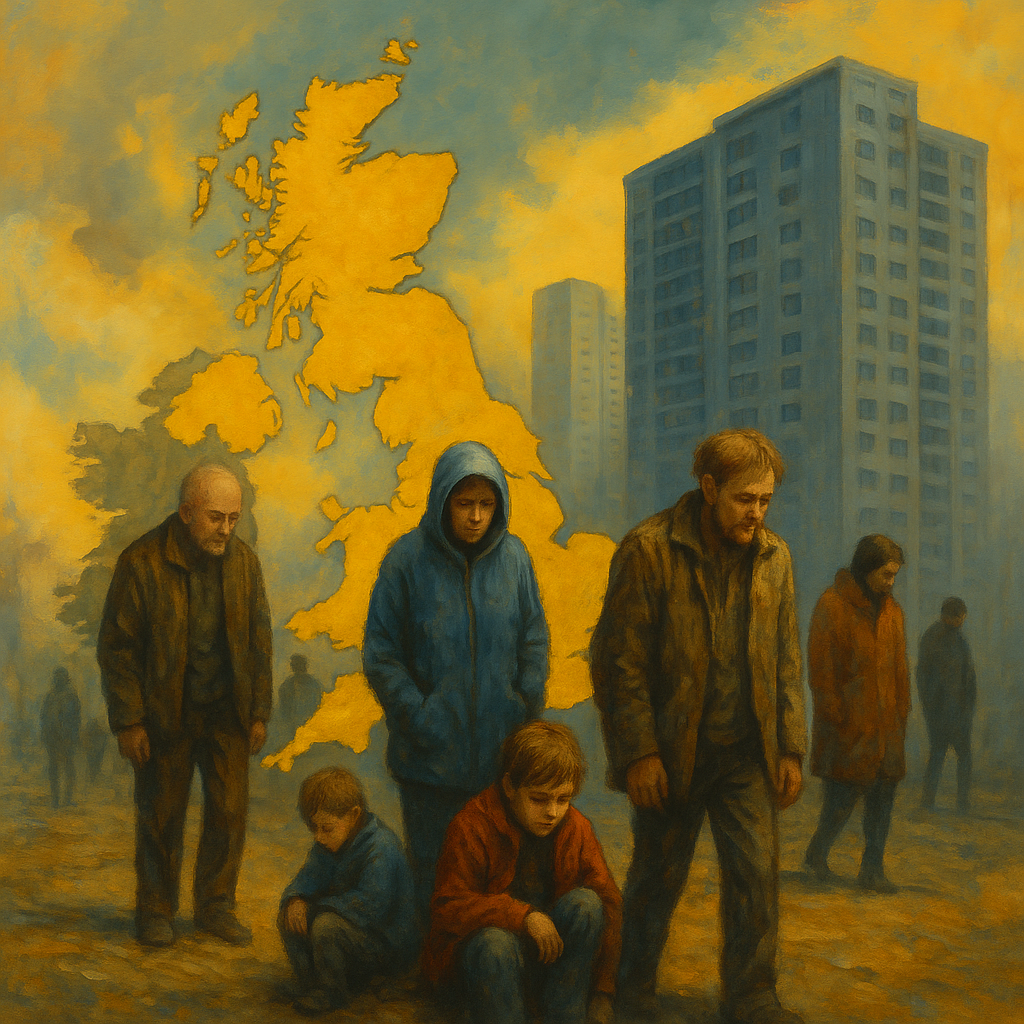
Except, after decades of expansion, poverty has not disappeared. In fact, it has deepened. Our reach has widened, but the cracks have widened faster.
That realisation is uncomfortable, but necessary. Because if growth is the measure, then we will keep building systems to manage symptoms rather than dismantling the causes that created them.
The Myth That Bigger Means Better
The myth is seductive: if charities get bigger, poverty gets smaller.
It looks logical on a dashboard – funders want to see reach, trustees want to see numbers rise, journalists want to write about scale. Growth becomes shorthand for progress.
But the truth is far less tidy. Growth does not equal change.
Consider the rise of foodbanks. Twenty years ago, they were almost unheard of. Today, they’re everywhere – hundreds of outlets, millions of parcels, thousands of pounds in donated food. It’s one of the fastest-growing movements in British civil society. And yet, food insecurity is higher than ever. Growth hasn’t solved poverty; it has normalised it.
The same pattern repeats across sectors: homelessness, youth work, mental health, advice services. Each has seen expansion and professionalism, but the underlying injustices remain stubbornly in place.
Growth, it turns out, is not neutral. It can become a gravitational force; pulling us toward managing crisis rather than preventing it, toward performance rather than transformation.
The Human Cost of Expansion
Behind every statistic is a person, and their stories reveal what numbers can’t.
A mother once arrived at a foodbank after walking miles with her children. Nervous, ashamed, she whispered, “I don’t want another parcel. I just want to feed my children myself.”
That line should stop us in our tracks. She didn’t want charity – she wanted justice. She didn’t want help – she wanted power. Growth in the number of parcels served was meaningless to her if it didn’t restore her dignity.
In another setting, a volunteer told me, “It feels like the more we grow, the less hope I have.” She was proud of the charity’s reach but despondent about what it meant. “The numbers are going up,” she said, “but that’s the problem, they shouldn’t be.”
And in a small community I once visited, residents had built their own informal support network; messy, local, relational. Then a large charity arrived with funding and formal structures. Within a year, the local group folded. Growth had crushed what was already working: neighbourliness, ownership, mutual care.
These are not isolated anecdotes; they expose a structural flaw. Growth often recentres us – our logos, our strategies, our survival – rather than the people whose freedom we claim to serve.
When Growth Becomes a Barrier to Change
Growth becomes problematic in three interconnected ways.
1. It recentres institutions, not communities.
As organisations expand, decisions drift upwards. Professional distance replaces proximity. We become administrators rather than neighbours, measuring outcomes instead of sharing burdens.
2. It creates competition, not collaboration.
In the scramble for contracts and grants, organisations guard their territory. Collaboration becomes risky, innovation gets tamed by bureaucracy, and the sector fragments into silos – each busy proving its worth rather than collectively changing the system.
3. It locks us into survival mode.
When an organisation becomes large, survival becomes the priority. Payrolls, estates, reputations – all need constant feeding. The energy that could challenge structural injustice is redirected into maintaining scale. We become too big to risk, too busy to reflect, too invested to change.
And so, while our balance sheets grow, inequality deepens. We perfect crisis management while injustice hardens into infrastructure.
Imagining a Shift Beyond
So what would it mean to shift beyond the reflex of growth?
It begins with asking different questions.
Not how do we grow? but how do we share power?
Not how many more clients can we reach? but how many fewer will need us?
Not how do we survive? but how do we make ourselves unnecessary?
Imagine if the test of success was not expansion but exit. Not empire-building, but community liberation.
Imagine a charity brave enough to shrink, to hand over assets, to stop doing the thing that made it famous because local people had taken it on themselves. Imagine funders who rewarded transfer of power rather than growth of scale.
This is not an argument for doing less. It’s an argument for doing differently. For ambition, rightly directed – ambition not for empire, but for justice.
Courage, Humility, and Systemic Honesty
To move beyond growth is to admit something uncomfortable: that charity, as we’ve known it, can sometimes entrench the very problems it seeks to solve. That requires humility.
It means re-examining the incentives that keep organisations chasing numbers rather than outcomes. It means asking whether our reporting frameworks reflect human dignity or institutional ego. It means holding space for failure, not as scandal, but as data for learning.
And it means leadership of a different kind: leaders willing to step back so that others can step forward; boards willing to measure freedom, not footprint; funders willing to finance the messy, relational, long-term work of systemic change.
From Altruism to Agency
The future of poverty reduction will not be written by those who build the biggest empires, but by those who build ecosystems where others can thrive.
We must move from performative acts of charity to purpose-first systems that restore dignity. That shift demands courage – to fund differently, lead differently, and sometimes let go entirely.
Because impact is not about how big our organisations become. It’s about how free people are to live without injustice.
That is the invitation of Shift Beyond: to replace growth with grace, scale with solidarity, and charity with change.
* note: content taken from a keynote given at the Shit Beyond Conversation in September 2025